

When people hear that the Creative Humanity Alliance offers a “lens,” they often ask: Is that a method? Is it a philosophy? Is it a set of steps I have to follow?
The answer is no. A lens doesn’t ask you to do anything. It allows you to see what is already there.
To explain the difference, think back to the first time you ever held a magnifying glass.
1. The Magnifying Glass (Seeing What Was Too Small)
When you were young and looked at a leaf through a magnifying glass, you didn’t have to change the leaf. You didn’t have to “fix” the leaf. You simply looked. Suddenly, you saw veins and textures that you knew were there, but were previously too small to understand.

This is what a lens does first: It brings your own patterns into focus. It helps you see that the things you thought were blurry or confusing actually have a structure. You don’t need to force them to change; you just need to see them clearly to understand how they work.
2. The Microscope (Seeing the Invisible Mechanism)
Later, imagine looking through a microscope. Now, you aren’t just seeing the surface in detail; you are seeing entirely new things—cells, movement, life—that were previously invisible to the naked eye.
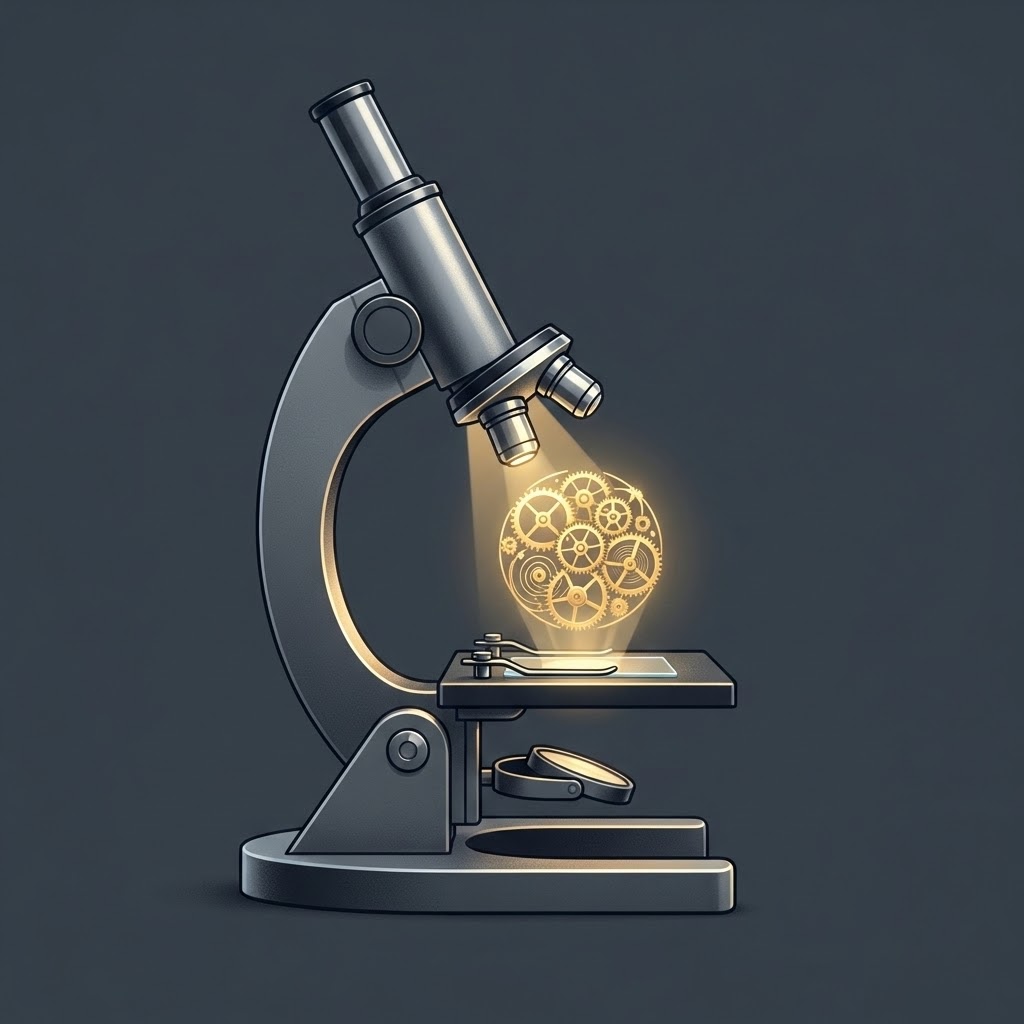
In our work, this is like seeing the hidden mechanisms that shape your life—the beliefs and stories that run in the background. The microscope doesn’t ask you to “believe” in cells; it simply shows you they exist. Once you see the mechanism, you stop blaming yourself for the outcome. You realize you’ve been trying to change the output without ever seeing the mechanism that produces it.
3. The Telescope (Seeing the Context)
Finally, imagine looking through a telescope. It is essentially the same instrument as the microscope, but instead of looking down, it looks up and out. A flickering dot of light suddenly resolves into a planet or a star. You see where things sit in the vastness of space.
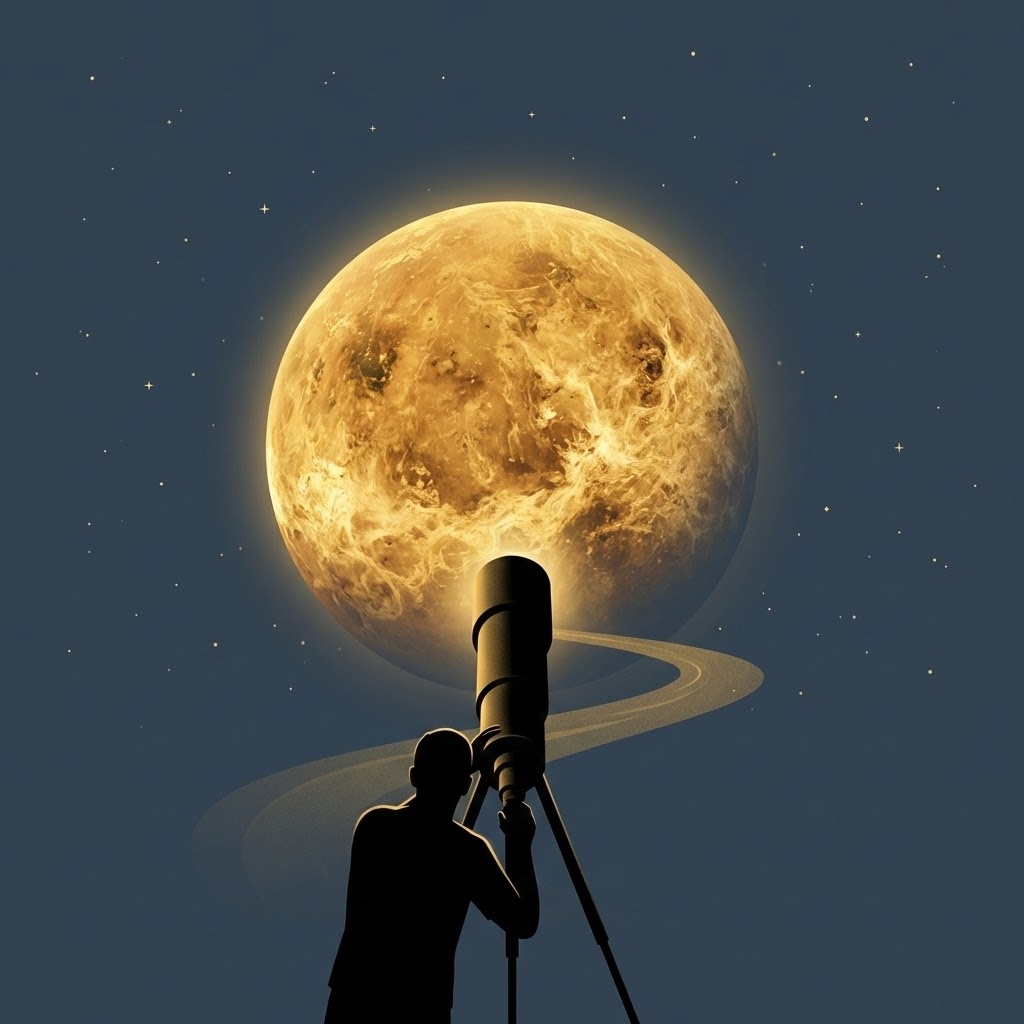
This is seeing Upstream. It allows you to see how your personal life fits into the larger history of humanity and civilization. You realize that you aren’t a broken dot in the sky; you are a planet caught in a gravitational pull.
Why This Matters
Here is the most important part: None of these instruments asked you to try harder.
- The telescope didn’t ask you to move the stars.
- The microscope didn’t ask you to rearrange the cells.
- The magnifying glass didn’t ask you to polish the leaf.
They just allowed you to look.
But in the looking, your relationship to everything changes. You stop guessing and start knowing. This is not a method to follow. It’s a way of seeing. When the lens changes, everything changes.
We don’t need to fix who you are. We just want to hand you the instrument that lets you see clearly.