

Description:
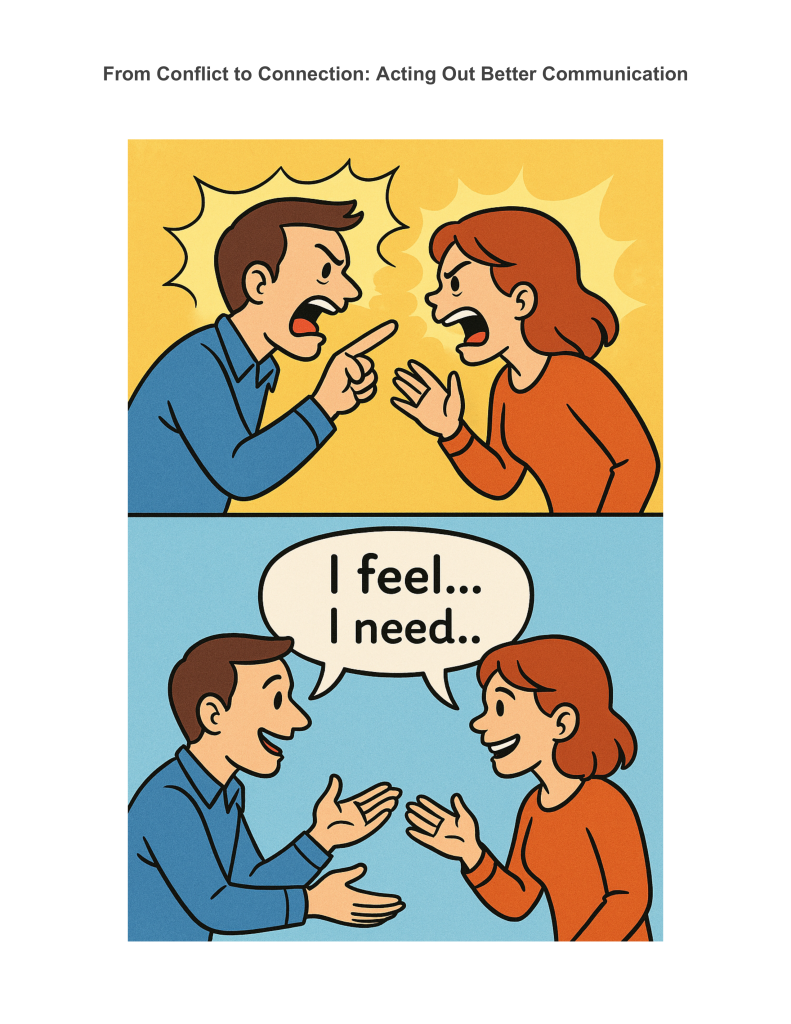
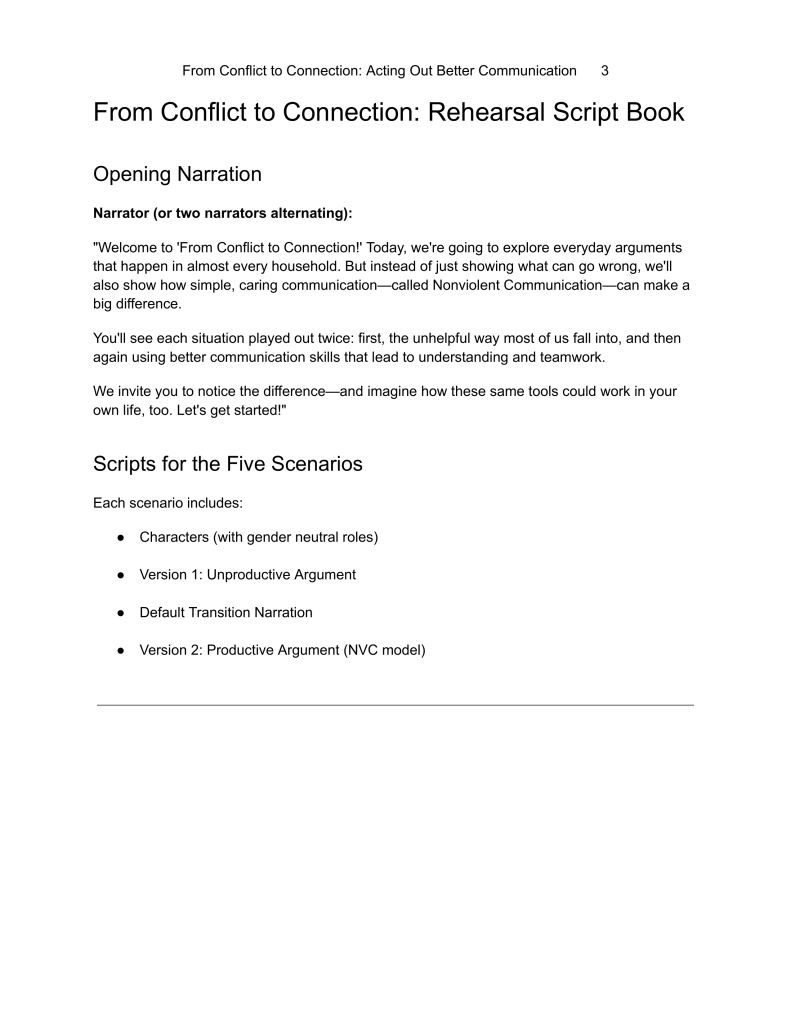
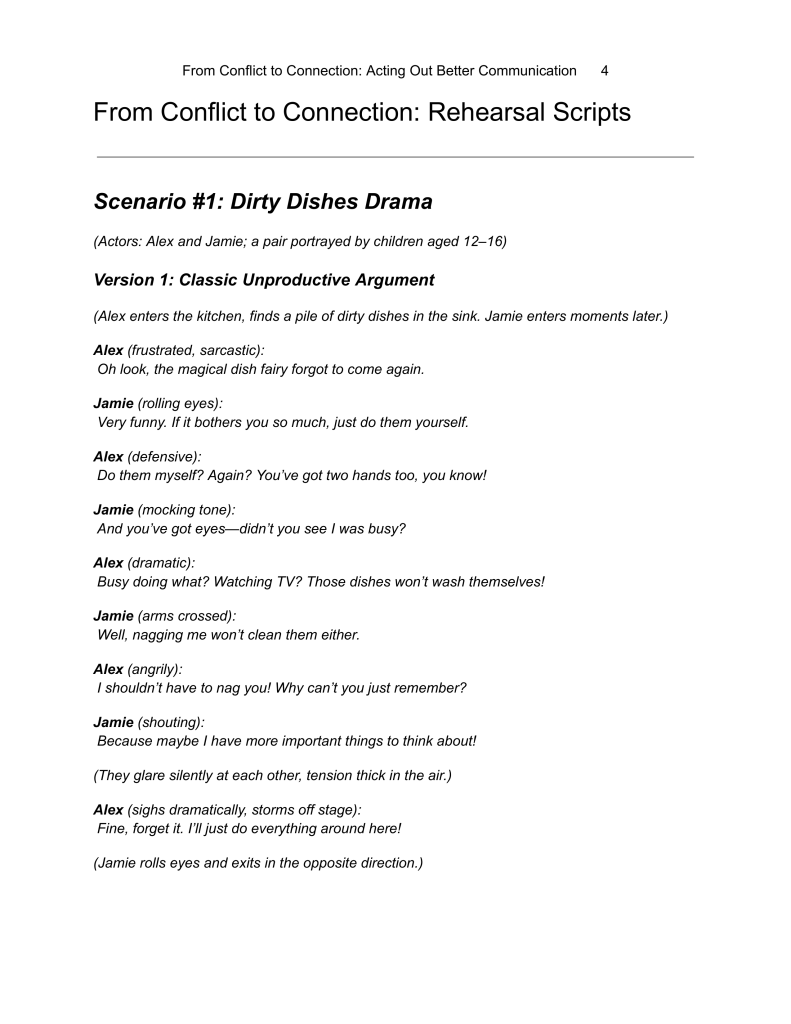
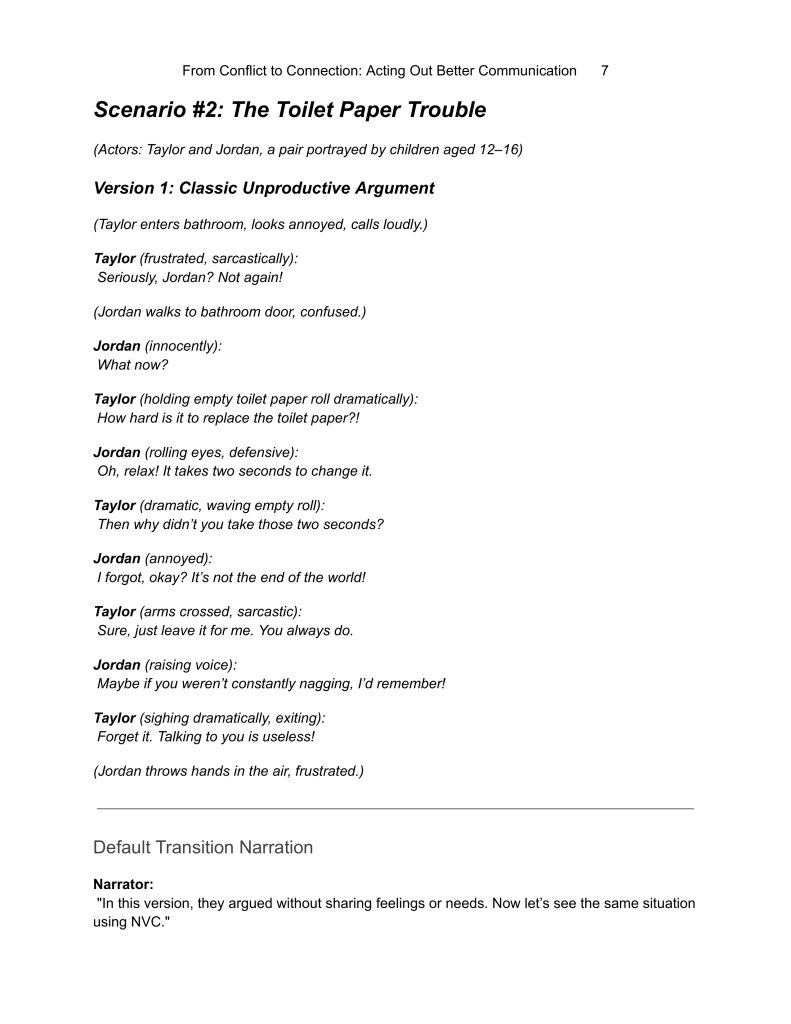
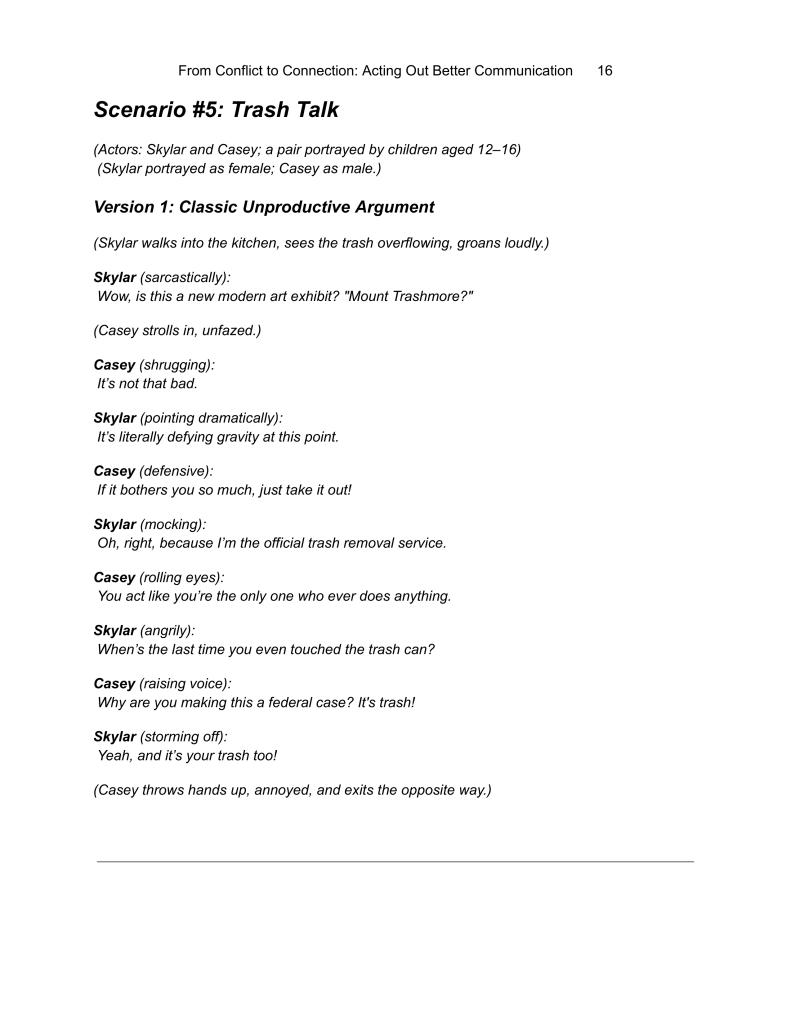
This project is designed to teach essential communication skills to students aged 9–14 by dramatizing common household conflicts. Students will act out each conflict in two ways:
- The Unproductive Way — showing how poor communication leads to escalation.
- The NVC Way — demonstrating Nonviolent Communication (NVC) skills to resolve the conflict.
Connection & Use
How It Strengthens Connection
From Conflict to Connection transforms communication breakdowns into opportunities for understanding. Through facilitated theater and role-play, participants don’t just talk about conflict — they embody it, explore it, and discover what’s underneath. By rehearsing empathy and expressing needs safely, the program helps people experience how communication itself can become an act of repair.
Who It’s For
- Classrooms, youth programs, and community groups seeking tools for emotional literacy and dialogue.
- Facilitators, counselors, and educators introducing experiential methods of communication.
- Organizations working to strengthen team relationships or reduce interpersonal friction.
- Anyone ready to move beyond blame and toward mutual understanding.
Designed for all ages and accessible at any skill level, From Conflict to Connection meets participants where they are — curious, cautious, or simply ready to try a new way of relating.
How to Run the Program
Step 1: Preparation
- Assign students to roles. (Each scene needs 2 actors + optional narrator.)
- Rehearse both the "bad" and "good" versions of each scenario.
Step 2: Performance Structure
- Act out the "Unproductive" (bad) version.
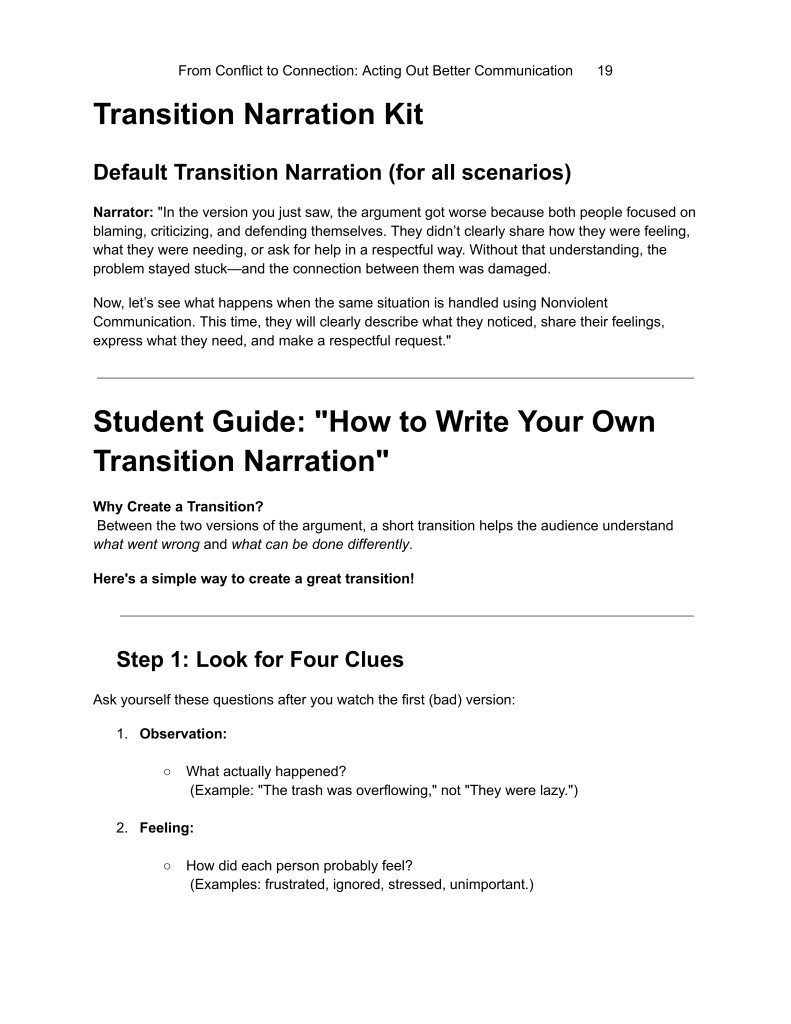
- The narrator gives a short transition explanation.
- Act out the "Productive" (NVC) version.
Step 3: Optional Participation
- Students can use the pre-written transition narrations or write their own using the provided guide.
Timing:
- Each complete scenario (bad + transition + good) should take approximately 10 minutes.
- All five scenarios fit comfortably within a 50–60 minute session.
Suggested Setup:
- Small stage or cleared space.
- Simple props (optional, such as towels, shoes, empty trash can).
Image Gallery


Downloads & Resources
Not logged in?
Donors and subscribers enjoy full access to our Pantry of creative resources. 
If you’ve already given — even a one-time gift of $10 — your account is automatically set up.
Not ready to donate yet? That’s okay! For now, all registered users get full access. Simply create your free account here:  Subscribe Now
Testimonials
”
Our group loved performing these scenarios. What could have been just skits became a doorway into real conversations about feelings and needs. It helps kids see conflict not as something to fear but as a chance to connect.
Thomas Rivera | Community Youth Program Director
”
From Conflict to Connection is more than a script book — it’s a structured way for kids to practice empathy. The Nonviolent Communication framework is beautifully simplified for this age group without losing its power
Dr. Aisha Khan | Child Psychologist
”
Seeing kids act out the ‘bad’ version and then the ‘good’ version made the lessons click instantly. My child came home excited to try the same skills with her siblings. I wish I’d had something like this when I was young
Mark Jensen | Parent & PTA Chair
About Mark Firehammer
Author-Songwriter-Entrepreneur
Born 1962, Mark cofounded Fitstreams.club in 2020 and myFeelness.com in 2024, an innovative alternative for physical well-being. After a career as a professional musician, he founded Attract More Clients in 2004 and now consults for Fitness Business Pros. Mark is also the author of The Echo and the Voice, a novel that explores authenticity, creativity, and cultural healing. As the founder of Creative Humanity Alliance, his vision is to inspire a cultural shift toward reconnection—helping people rediscover their voices, their creativity, and one another.
A believer in opportunities over obstacles, he’s passionate about empowering others to live without limits—and he loves cats.